
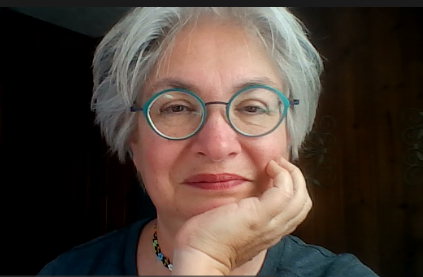
Dr. Michelle Winter
Learning to Listen
My father was a diplomat and human rights advocate, and I grew up moving among different countries, cultures, and circumstances—places shaped by war and by peace, poverty and wealth. Early on, I became curious about who people are beneath the differences that are easiest to see.
I learned to notice the ways culture shapes us, but also the ways we are shaped by suffering and joy, trauma and resilience, and by the beliefs we carry about ourselves, one another, and God.
These questions have always captivated me: how do we make meaning? how do we communicate what matters? and how do we encounter the Sacred?
WHEN WORDS WEREN'T ENOUGH
As a teenager, I was the victim of a violent crime. I did not have the words to communicate what had happened to the adults around me. Yet in the midst of that time, I knew the deep presence of God.
That experience stayed with me. It made me want to work with young people who were suffering—especially those who needed an adult willing to listen patiently and attend to the many ways a they might communicate what they were experiencing, even when words were not available.
I became an English teacher and began facilitating poetry groups with adolescent suicide survivors and with young people navigating gangs, mental illness, and difficult circumstances at home.
LISTENING FOR THE SACRED
Later, while working with teenagers and women in church settings, I began to notice that people sometimes lacked words not only for suffering, but also for their spiritual lives. They struggled to describe their experiences of God and the Sacred—and to receive the possibility of their own belovedness.
The “teacher” in me wanted to explore fruitful ways of helping people recognize and respond to the Sacred in their own lives. I wanted to understand what might become possible when we made room for other ways of knowing and expressing what we experience. That question led me into the study of spiritual formation, theology, trauma, expressive arts, spiritual direction, and eventually theopoetics.
following the questions
My formal education followed those questions as they rose within me. “How do people learn and make or express meaning?” became a B.A. in English and History with secondary education certification. “What forms our spiritual journeys and how do we come to integrate the Sacred into our lives?” became a certification in spiritual direction, and then a Master of Theological Studies. “How do we grow spiritual resiliency when everything we thought we knew disintegrates?” became a Doctor of Ministry focused on trauma and spirituality.
Today, those strands come together in my work as a spiritual director, educator, writer, facilitator, and theopoetics practitioner. Whether I am sitting with one person, teaching a class, walking with a group in the forest, or creating something collaboratively, I remain interested in the same question that has followed me from the beginning:
What becomes possible when we learn to listen beyond words?
EDUCATION & FORMATION
B.A., English & History, Secondary Education Certification — Grand Canyon University
Certificate in Spiritual Direction — Sustainable Faith
Certified Nature and Forest Therapy Guide — Association of Nature and Forest Therapy Guides
Master of Theological Studies — Pacific School of Religion, Graduate Theological Union
Doctor of Ministry, specializing in Trauma and Spirituality — Pacific School of Religion, Graduate Theological Union