
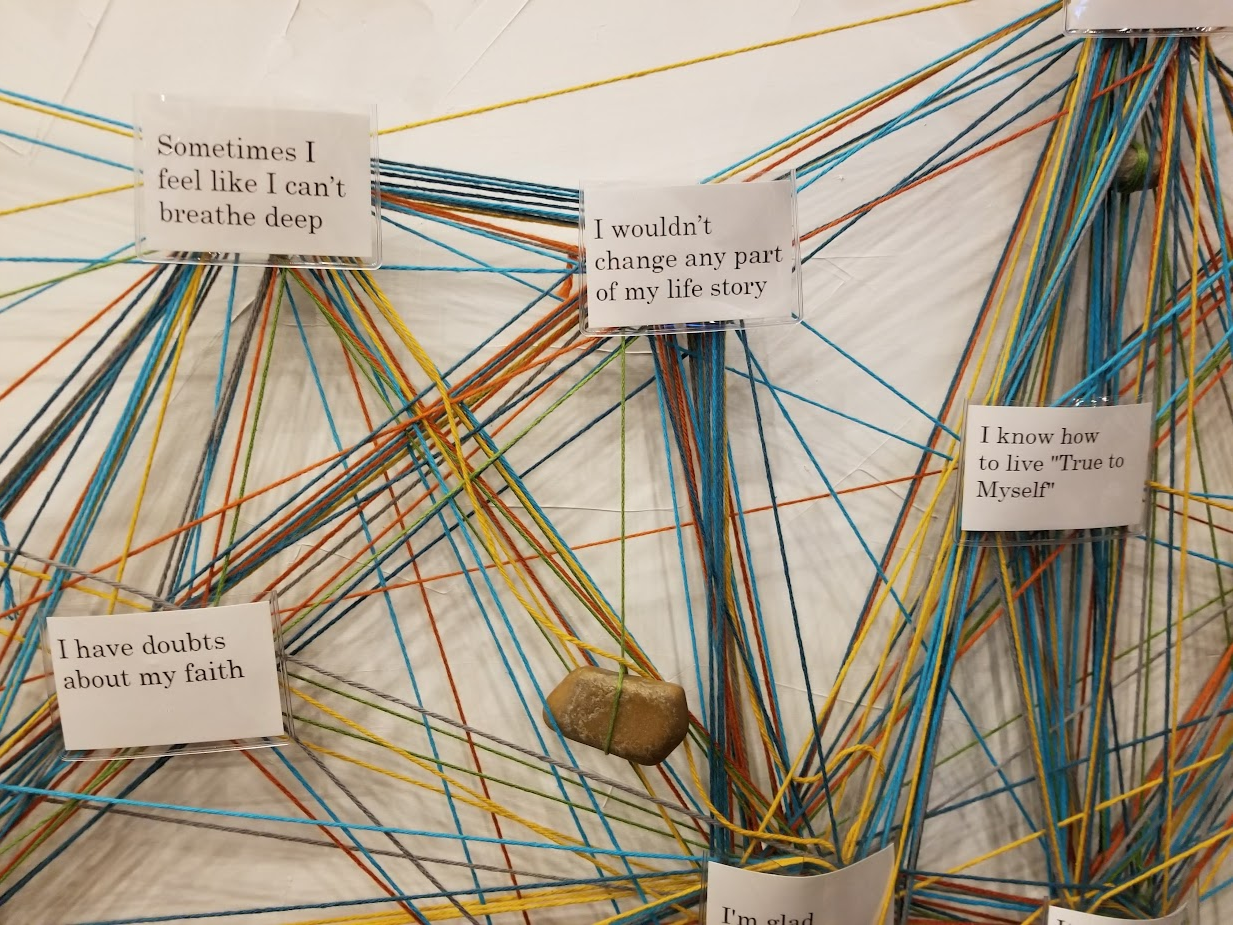
What might belonging look like without sameness?
A “portrait” captures who we are at a moment in time. What if it could also reveal the ways we are similar and different that aren't always visible? I wondered if we could create a visual that revealed the ways a community overlaps, diverges, and belongs together.
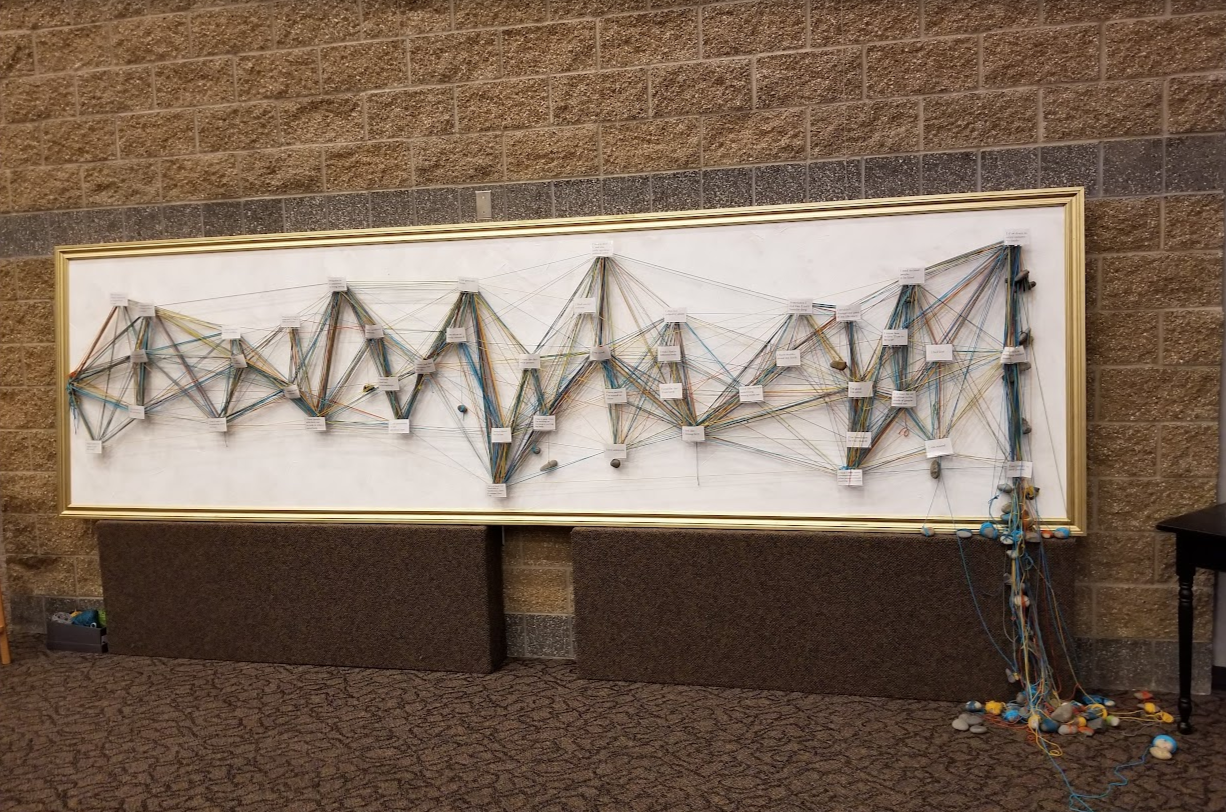
We built a sixteen-foot board and placed knobs across its surface, each associated with a statement. Nearby we placed colred yarn and stones. Over several weeks, people were invited to choose from these materials and unwind their yarn around the knobs with statements that were true for them. Each choice added another line to the portrait, and each line described something about how they understand themselves.
WHAT BECAME VISIBLE
As the weeks passed, individual lines became a web.
People could see threads gathering around statements they had chosen themselves. Sometimes many paths converged. Sometimes a line traveled somewhere unexpected. The portrait did not show a community in agreement. It showed a community in relationship.
Two things became visible at once:
I am not alone.
We are not all alike.
BELONGING WITHOUT SAMENESS
The finished portrait held hundreds of individual choices. No one person determined its shape, and no single line described the community.
Belonging did not require agreement. Difference did not require disconnection.
We could remain ourselves and still be part of one another.